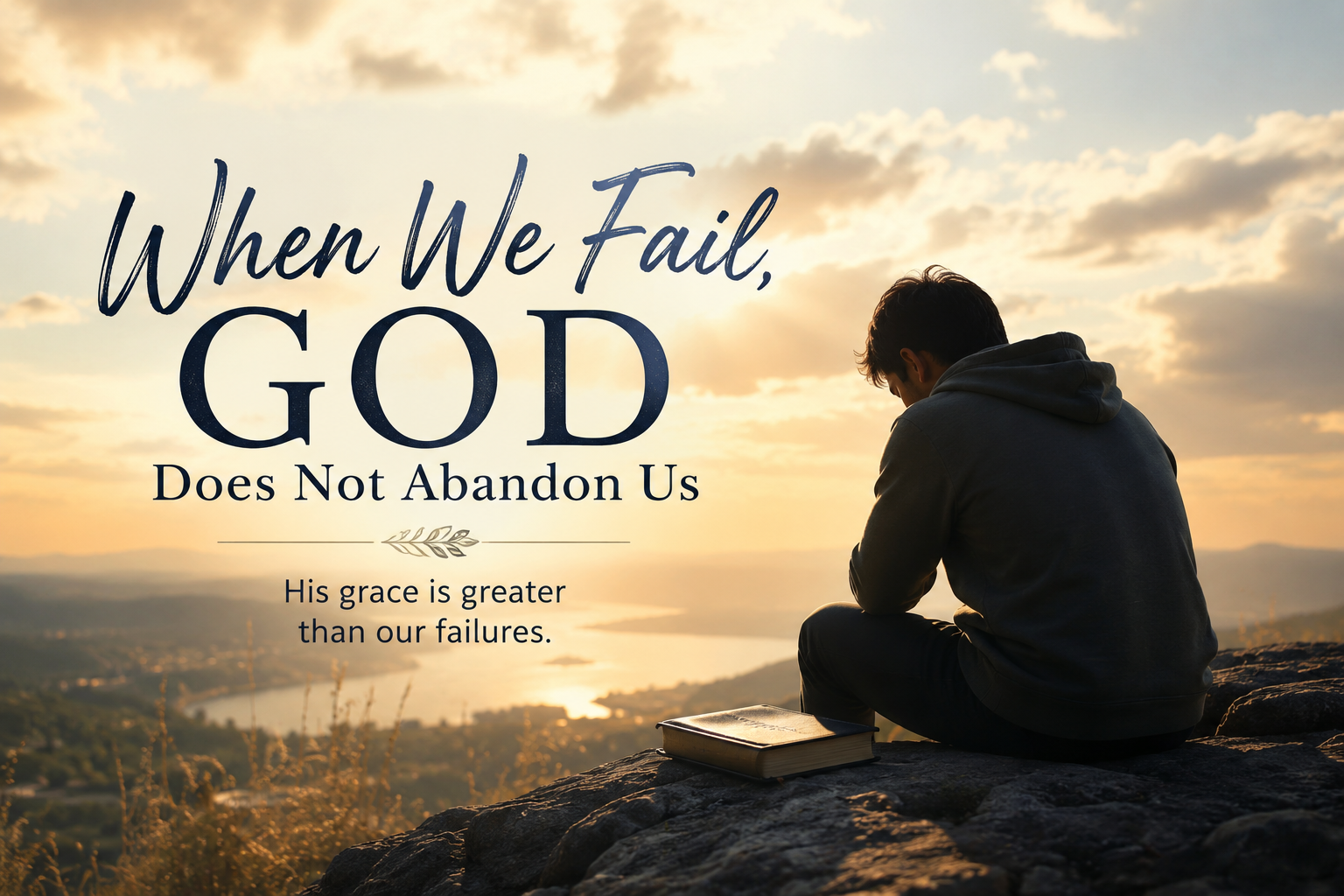
When We Fail, God Does Not Abandon Us
“Psalm 51:10”
David made serious mistakes, but his story reminds us that our failures do not mean God has abandoned us. When David sinned, he confessed, repented, and returned to God. His story teaches us that true faith is not about being perfect; it is about continuing to trust God, seeking His forgiveness, and allowing Him to transform our hearts.
Have you ever made a mistake that made you feel unworthy of God?
Sometimes, after we sin, we feel ashamed. We may think, “How could God still love me after what I did?” Because of guilt, we might even distance ourselves from God.
The story of David gives us a powerful reminder: our failure does not mean God has abandoned us.
David was called a man after God's own heart, yet he was far from perfect. He committed adultery with Bathsheba and arranged for her husband, Uriah, to be killed. David's actions were serious sins, and God did not simply ignore them.
God confronted David through the prophet Nathan.
David responded:
“I have sinned against the LORD.”
— 2 Samuel 12:13
David did not make excuses. He acknowledged his sin.
David Ran Back to God
After his sin was exposed, David turned to God in repentance. Psalm 51 records his heartfelt prayer.
He prayed:
“Create in me a pure heart, O God, and renew a steadfast spirit within me.”
— Psalm 51:10
David understood that he didn't simply need his situation to change. He needed God to change his heart.
He asked God to restore his joy, renew his spirit, and keep him close to His presence.
This is an important lesson for us.
When we sin, our first response can sometimes be to hide from God because we feel ashamed. But God invites us to come to Him honestly.
We don't need to pretend that we are perfect.
We need to come to Him with a repentant heart.
Forgiveness Does Not Always Remove Consequences
David was forgiven, but his sin still had consequences.
God disciplined David, and painful consequences followed his actions. This shows us that God's forgiveness does not necessarily mean that every consequence disappears.
But discipline is not the same as abandonment.
God corrected David because He was still working in his life.
Sometimes, God's correction is actually evidence that He cares about us.
David Continued to Trust God
David's life after failure wasn't perfect. But he continued to seek God, pray to Him, worship Him, and depend on Him.
That's what makes David's story so encouraging.
David's faith was not based on being sinless.
His faith was based on knowing that God is merciful, faithful, and worthy of trust.
When David fell, he came back to God.
When he was broken, he prayed.
When he was corrected, he humbled himself.
And when he needed restoration, he sought God.
What Can We Learn From David?
1. Don't hide your sin from God.
God already knows our hearts. Instead of hiding, come to Him honestly.
2. Confess your sin.
Like David, we can admit when we have done wrong.
3. Repent and turn back to God.
Repentance is more than feeling sorry. It means turning away from sin and returning to God.
4. Accept God's correction.
There may be consequences for our actions, but God's discipline can help us grow.
5. Keep trusting God.
Your failure is not the end of your story.
God can restore, transform, and continue working through a person who humbly returns to Him.
When You Feel Unworthy
Maybe you have failed God recently.
Maybe you made a decision you regret.
Maybe you've fallen into the same sin again and again.
Don't allow shame to convince you that God has abandoned you.
Instead, follow David's example.
Come back to God.
Confess.
Repent.
Ask Him to create a clean heart within you.
And continue trusting Him.
You may have failed, but God has not stopped being faithful.
David's story reminds us that God's grace is greater than our failures. We should never treat sin lightly, but neither should we allow our failures to keep us away from the One who can restore us.
Reflection
Take a quiet moment to examine your heart before God.
- Is there a mistake or sin you have been trying to hide from Him?
- Have guilt and shame caused you to withdraw from prayer, worship, or Christian community?
- What would it look like for you to confess honestly and take one step back toward God?
- Is there a consequence or correction you need to accept with humility?
- Who could help you walk in repentance, accountability, and restoration?
Remember:
When we fail, we don't need to run away from God. We need to run back to Him.
Answer
God does not abandon me when I fail. I can come to Him honestly, confess my sin, and trust His forgiveness. My failure may have consequences, but it does not have to define my future. Through repentance, God can cleanse my heart, restore my relationship with Him, and continue shaping me into the person He has called me to be.
Prayer
Heavenly Father,
Thank You for loving me even when I fail. I confess that I have sinned and made choices that have not honored You. Please forgive me and create in me a clean heart. Renew my spirit, restore my joy, and help me turn away from anything that separates me from You.
Give me humility to accept correction, courage to face the consequences of my actions, and wisdom to make better choices. Help me not to hide in shame, but to run back to You with honesty and faith.
Thank You that my failures do not cancel Your faithfulness. Help me trust Your grace, receive Your forgiveness, and allow You to transform my life.
In Jesus' name, amen.
Continue Reading
More from this topic to deepen your understanding
When God’s Word Is Hard to Follow
Sometimes we know what God’s Word says, but obeying it is not always easy. We may face situations where our feelings, plans, or circumstances tell us to choose another way. But real faith is not only about hearing God’s Word—it is about trusting Him enough to follow it.
September 18, 2026
Read more →
When Love Begins at Home
Our family is one of the first places where we can show the love of God. We may not have a perfect family, and there will be misunderstandings, failures, and difficult moments. But we can choose to love, forgive, listen, encourage, and make time for one another. Loving our family is not about having a perfect home; it is about allowing God's love to shape the way we live together.
September 10, 2026
Read more →Comments (0)
No comments yet. Be the first to share your thoughts!